Narcolepsy Nerd Alert: Health Insurance 101

Narcolepsy Nerd Alert Health Insurance 101If you are comparing health insurance options or have a new narcolepsy diagnosis and treatment plan to consider, you may have questions like, “How do I know my medications and procedures will be covered? ” or “What can I do if a prescription is not approved by my insurance?” With lengthy documents, unfamiliar terms, and crucial deadlines, it can feel overwhelming.

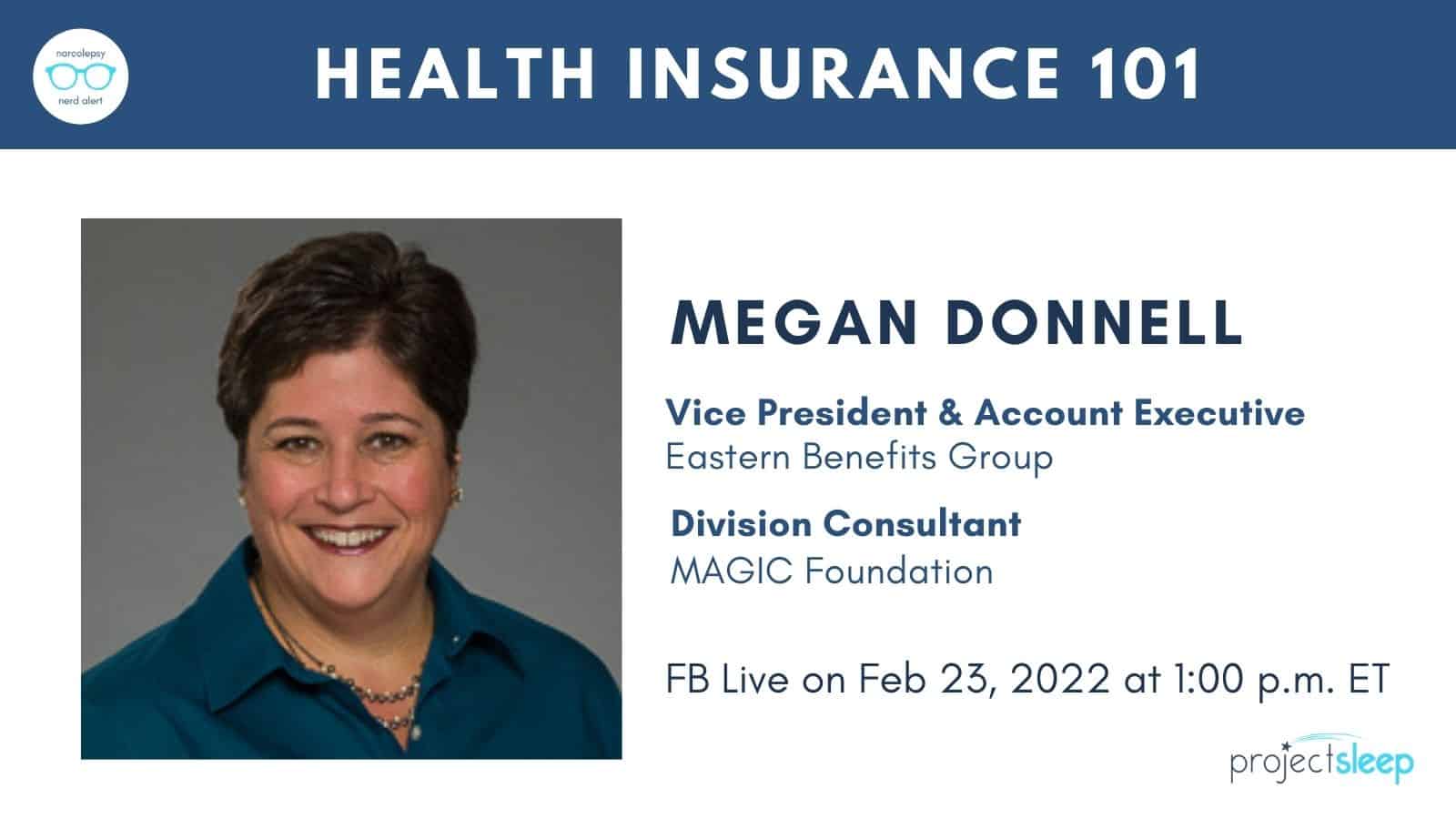
Project Sleep President and CEO, Julie Flygare, hosted the “Health Insurance 101” broadcast with special guest Megan Donnell to discuss the basics of health insurance, tips for success, and where to find help if you need it.

Use the buttons below to jump to the different formats of this conversation and download the Health Insurance 101 toolkit for more information.

Recording

Toolkit

Podcast

Transcription

Download the Health Insurance 101 Toolkit

Image of Health Insurance 101 Toolkit coverNarcolepsy Nerd Alert toolkits accompany each broadcast. These guides are designed for people living with narcolepsy and their loved ones to offer new tools, tips, and perspectives on navigating narcolepsy.

Types Of Insurance

Understanding which kinds of plans are available to you and the amount of coverage provided when choosing a plan are the first steps to success. The following types of health insurance coverage are available in the USA:

  • Group sponsored health insurance 
  • Private direct pay health insurance
  • Individual/family coverage via the Exchange (“Marketplace”)
  • Medicare
  • Medicaid and/or CHIP

The information in this broadcast focuses on group health insurance, but much of it can be applied to other types of plans.

Comparing Options

Usually, an insurance provider will offer multiple plans or types of plans at different price points. Your out-of-pocket costs, flexibility in choosing providers, and other considerations will vary according to the type of plan you choose.

Benefits and Coverage

Take time to carefully review the information given in the Summary of Benefits and Coverage provided by the insurance carrier. You can determine the best choice for your situation by comparing the costs in these areas across various plans:

While it seems logical that a more expensive plan would probably cover more, this is not necessarily true. Be sure to read carefully, understand your options, and ASK if you have questions! 

Understanding Your Plan

How do I know what my plan will cover? 

  • Start with your Summary of Benefits and Coverage for basic information including co-pays, deductibles, out-of-pocket maximums, etc.
  • Each year the insurance company should provide a Certificate of Coverage or Health Plan Coverage with more in-depth information.
  • For certain procedures and medications, there is typically a Medical Policy. This may also be Coverage Policy or Pharmacy Policy.

Common terminology with prescription approvals:

  • “Prior authorization” – requires the doctor ordering a procedure or prescribing a drug to provide evidence for medical necessity under the insurance company’s guidelines. The insurance company approves the procedure or prescription before it can be released to the member.
  • “Step therapy” – requires the member to try a “lower tier”/lower cost prescription before the higher cost/brand is approved.
  • “Dispensing limitation” – insurance company may limit certain drugs to a number of doses in a month.


Keep in mind that coverage is dependent on your plan alone – you could have the same carrier and same type of plan as your neighbor, but coverage can vary!”

– Megan Donnell

Denials and Appeals

It’s not uncommon to be denied coverage for a medication or other medical claim. If this happens to you, make sure to follow the appeal protocol carefully. 

  • The doctor initiates the coverage request with the insurance company.
  • The doctor is typically responsible for the first round of appeals.
  • If the doctor’s appeal is denied, the member should get a notification in the mail with instructions on how to file a second-level appeal.
  • You can request a “Summary of Plan Document” from your employer that may detail the appeal process.
  • You could ask your employer if their Insurance Broker of the medical insurance will help.
  • Final appeal after internal appeal is typically external and will be binding. 

Health Insurance and Narcolepsy: Steps to Success

While your schedule may be full and energy may be limited, taking ownership over your health insurance will help you avoid more challenges down the road. 

  • Always open EVERY piece of mail from your insurance company or the pharmacy benefit manager.
  • Be engaged & ASK questions. If you have insurance at work go to any open enrollment or educational events.
  • NEVER assume benefits are the same each year.
  • If offered a case manager – accept!
  • If you are told you need to participate in a program, ask if it is mandatory.
  • Know your coverage BEFORE you apply for certain services.
  • Document any communication with the insurance company/doctor’s office.
  • Keep copies of your appeal documents & follow the deadlines and appeal instructions.

For more information on this topic, download the Health Insurance 101 toolkit!

I have gone through more prior authorization denial appeal procedures than I care to count. Hopefully by having the information they need up front, people can avoid this situation.”

– Megan Donnell

Health Insurance 101: Listen or Watch!

The Health Insurance 101 broadcast originally aired on February 23, 2022.

Meet Our Guest

Megan Donnell is a passionate advocate for those living with rare disorders, primarily children’s growth and narcolepsy/idiopathic hypersomnia. She is the Division Consultant for Small for Gestational Age for the MAGIC Foundation and ICOSEP and has provided benefit education and advocacy webinars for MAGIC and Ascendis Pharmaceuticals.

Megan holds a BA from The University of Richmond and an MBA from The University of Phoenix. With over 20 years of client service and account management experience, she works closely with clients as Vice President and Account Executive at Eastern Benefits Group. She lives on the South Shore of Massachusetts with her husband Jerry and has two children in college, one of whom is living with idiopathic hypersomnia.

Resources

Here are some of our favorite resources for navigating narcolepsy.

  • NeedyMeds.org
    • Education and educational webinars
    • Ways to save on medications
    • Locate patient assistance programs
  • Jazz Cares
    • Patient assistance program for Xyrem and Xywav
    • 1-833-533-JAZZ
  • WAKIX for You 
    • Patient assistance program for WAKIX
    • 1-855-WAKIX4U

Project Sleep’s Sleep Helpline

Project Sleep’s Sleep Helpline™ is a nonprofit-led free national helpline providing personalized support and resources for people facing sleep issues and sleep disorders.

Get Personalized Information & Support

Project Sleep’s live broadcast series Narcolepsy Nerd Alert takes a deeper dive into specific topics related to narcolepsy. Hosted by award-winning geek Julie Flygare, each live event invites fellow #NarcolepsyNerds to explore unique aspects of the narcolepsy experience, contemplate bold questions, and learn from each other.

View all broadcasts and explore upcoming topics on our Narcolepsy Nerd Alert page.
Calling All #NarcolepsyNerds!

Whether you geek out about science, art, advocacy, or pop culture—this community is for you. Please sign up for updates on live broadcasts, video recordings, printable toolkits and exclusive prizes.

More Narcolepsy Nerd Alert Topics

Share this...

Leave a Reply

Your email address will not be published. Required fields are marked *

Fill out this field
Fill out this field
Please enter a valid email address.
You need to agree with the terms to proceed